
The BIS: The Bank for International Settlements-The "Bank of Central Banks"
What is the BIS?
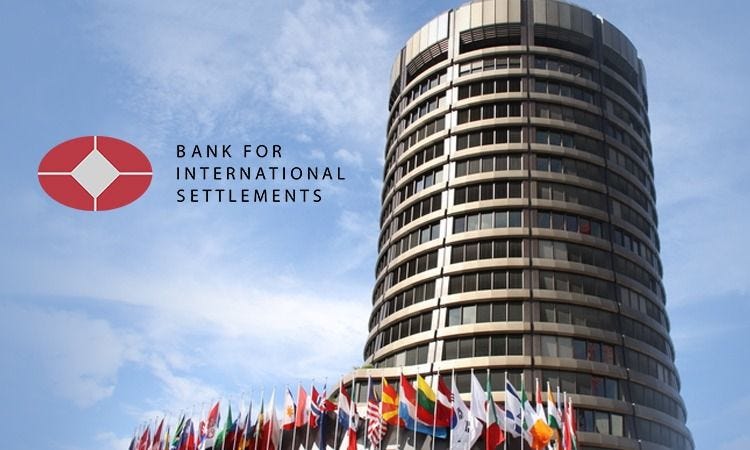
The Bank for International Settlements (BIS), headquartered in Basel, Switzerland, is the oldest international organization in the global financial system. Founded in 1930, it is often referred to as "the central bank of central banks."
It is not a commercial bank; it does not lend money to individuals or businesses, and it does not issue currency. Its mission is to foster cooperation between central banks and serve as a forum for international financial stability.
Brief History
1930 – Founded to manage Germany's war reparations after the First World War (Treaty of Versailles). The original plan quickly collapsed with the Great Depression.
1930s–1945 – It remained operational during the Second World War, an episode that still generates controversy today (accused of having facilitated the transfer of Nazi gold).
Postwar – It gradually transforms into its current role as a "club" of central banks and a research center on financial stability.
1971 – End of the Bretton Woods system: the BIS becomes increasingly important as a hub for coordination between central banks in a world of fiat currencies and floating exchange rates.
Who is part of it
Today, 63 central banks are members and shareholders of the BIS (including the ECB, the Fed, the Bank of Japan, the People's Bank of China, the Bank of England, the Bank of Italy, etc.). They represent approximately 95% of global GDP.
Italy is a founding member, and the Bank of Italy holds approximately 7% of the capital (one of the highest shares after the USA, Germany, France, the UK, and Japan).
What the BIS Really Does
It hosts key committees
The Basel Committee on Banking Supervision (BCBS), author of the Basel I (1988), Basel II (2004), Basel III (2010-2019), and now Basel IV (being implemented 2023-2028). These are the minimum capital and liquidity standards that almost all banks in the world must comply with.
The Committee on Payment and Settlement Systems (CPMI).
The Committee on Global Markets (CGFS).
The Financial Stability Board (FSB) has been based at the BIS since 2009.
Banking and Financial Services
Manages central bank reserves (gold and currency deposits).
Provides "bridge lending" services in the event of liquidity crises between central banks.
It is one of the largest holders of physical gold (approximately 500 tonnes in custody).
Research and Data
Publishes reference reports:
Quarterly Review
Annual Economic Report
Statistics on international debt, OTC derivatives, locational banking statistics, etc.
Innovation Hub
Since 2019, it has created the BIS Innovation Hub, with centers in Singapore, Hong Kong, London, Stockholm, Paris, Toronto, and Frankfurt. It experiments with CBDCs (central bank digital currencies), tokenization, cybersecurity, and cryptocurrency regulation.
Structure and Independence
Almost complete diplomatic immunity (1987 and 2013 headquarters agreements with Switzerland).
It is not accountable to any government or to the European or national Parliament.
The Board of Directors is composed of the governors of the main central banks (Powell, Lagarde, Panetta for Italy, Bailey, Ueda, etc.).
The Director General (Agustín Carstens, former governor of the Bank of Mexico, since 2023) is a figure of enormous influence in the financial world.
Recurring criticisms
Lack of transparency and democracy ("central bankers' private club").
Role during World War II.
Perception of promoting excessively stringent policies (especially Basel III/IV, criticized by many European and Italian banks).
In recent years, it has been accused by some circles (especially crypto and libertarians) of wanting to hinder private cryptocurrencies in favor of CBDCs.
The BIS today (2025)
It is pushing hard for CBDCs: the mBridge project (China, Hong Kong, Thailand, the Emirates, and Saudi Arabia) is one of the most advanced in the world for cross-border payments on permissioned blockchains.
It is working on the final "Basel Framework" (Basel IV), which will come into full force in 2028 and will increase capital requirements for many banks.
It publishes increasingly alarmist reports on global debt (over 300% of global GDP in 2025) and on climate and cryptocurrency risks.
In short, the BIS is probably the least known institution among the general public, yet one of the most powerful on the planet: it doesn't issue money, but it decides how much the world's banks hold. Anyone who wants to truly understand how the global financial system works will sooner or later end up in Basel.
Thank you for reading. Share this article with your network!