
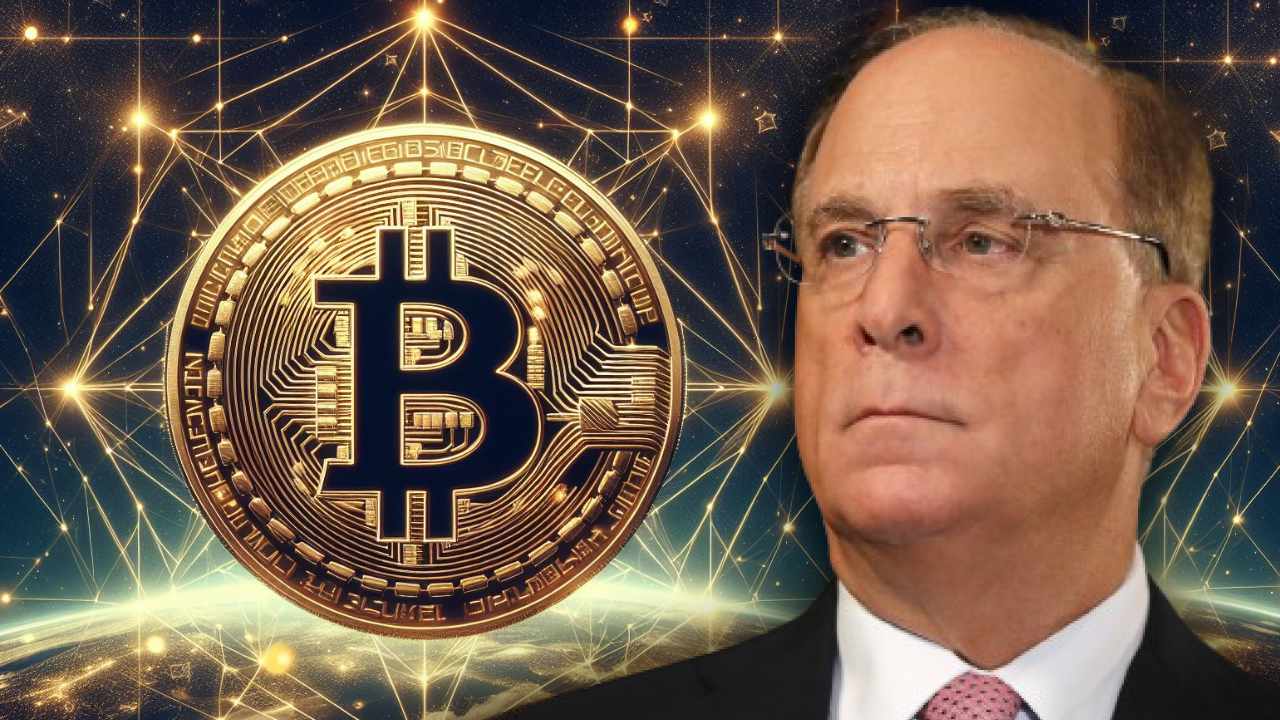
Larry Fink: From Initial Skepticism to a Strong Endorsement of Bitcoin
Larry Fink, CEO and founder of BlackRock, the world's largest asset manager with over $13.5 trillion under management, has significantly evolved his views on Bitcoin in recent years. In 2017, he called it an "index for money laundering and thieves," but in 2025, he publicly admitted he was wrong, describing it as an "asset of fear." This definition reflects how Bitcoin is purchased in times of economic or geopolitical uncertainty, or fiat currency debasement, serving as a hedge against inflation and rising sovereign debt. Fink compares it to gold, emphasizing its role as a portfolio diversifier and hedge against currency debasement. In an interview at the New York Times DealBook Summit on December 3, 2025, he reiterated: "There's a huge use case for Bitcoin, not as speculation, but as a long-term asset." He also predicted "extraordinary growth" in the tokenization of crypto-based assets, which could accelerate "faster than expected," comparing it to the rise of the internet.
Fink's Latest Statements on Bitcoin and Sovereign Wealth Funds
Fink's most recent remarks, delivered at the DealBook Summit on December 3-4, 2025, focus on accumulation by sovereign wealth funds (SWFs), the state-owned funds that manage the national reserves of resource-rich countries like Abu Dhabi and Luxembourg. Fink revealed that "a number of SWFs are buying Bitcoin incrementally," not for speculative trading but for long-term strategies. They bought during recent declines: "They added at $120,000, $100,000, and I know they bought more in the $80,000s." These purchases are occurring via spot ETFs like BlackRock's iShares Bitcoin Trust (IBIT), which surpassed $70 billion in assets under management (AUM) in 2025. Fink described these flows as a sign of maturity: "We're seeing more and more legitimate long-term investors, including SWFs, holding it for years." Concrete examples include Abu Dhabi's Mubadala fund, which tripled its holdings in IBIT in the third quarter of 2025 (nearly $518 million), and Luxembourg's sovereign wealth fund, which confirmed new investments. According to Fink, if SWFs allocated just 2-5% of their portfolios to Bitcoin (as predicted at Davos in January 2025), the price could skyrocket to $700,000. These comments align with BlackRock's evolution: IBIT has become the world's largest Bitcoin ETF, with over 780,000 BTC held (about $80 billion), and Fink has pushed for greater digitalization in the US to avoid losing ground to China.
Future Prospects for Institutional Investment in Bitcoin
In 2025, institutional investments in Bitcoin will reach a historic milestone: over $414 billion allocated in August, with net flows into spot ETFs exceeding $14.8 billion. Approximately 59% of institutional portfolios now include digital assets, with Bitcoin accounting for 10% or more on average. The outlook is bright thanks to:
Favorable regulation: The approval of spot ETFs (starting in 2024) and legislation like the GENIUS Act (July 2025) for stablecoins have created legal clarity, attracting pensions, hedge funds, and banks. 55% of traditional hedge funds hold cryptocurrency, up from 47% in 2024.
Mature infrastructure: Custody from giants like JPMorgan and BNY Mellon, and Bitcoin-backed loans, reduce risks. Flows into ETFs like IBIT reversed November's outflows (net $238 million in one week), with accumulation from MicroStrategy (which purchased 3.3 times the new mining supply) and universities like Harvard ($443 million in IBIT).
Macro factors: Fed rate cuts and global liquidity are pushing risk assets like Bitcoin. Analysts predict a target of $150,000-$200,000 by the end of 2025, driven by "long-only" institutions that see it as a hedge against the US deficit.
However, volatility remains a risk: Fink warns that short-term traders need to be "very good at timing," while long-term holdouts will benefit. In 2026, even greater adoption is expected in pensions and SWFs, with Bitcoin becoming a "mega-cap asset.
Current and Future Government Investments in Bitcoin
Government investment in Bitcoin has evolved from random seizures to deliberate strategies, with governments holding 2.3% of the total supply (over 463,000 BTC as of April 2025). Here's an overview :
Government/Country
BTC Held (2025)
Approximate Value
Origin/Notes
USA
~198,000
~$18.3 billion
Mainly seizures (e.g., Silk Road); Trump's Executive Order (March 2025) creates "Digital Fort Knox" for strategic reserves. Texas invested $5 million in IBIT + plans for another $5 million in self-custody. Wisconsin: $100 million in ETFs
China
~194,000
~$17.6 billion
From PlusToken scam (2019); despite mining/trading ban, not liquidated.
United Kingdom
~61,000
~$7.3 billion
Cybercriminal seizures.
Ukraine
~46,000
~$4.2 billion
Donations and seizures during conflicts.
Bhutan
~12,000-13,000
~$1.1-1.4 billion
Green hydropower mining via Druk Holding.
El Salvador
~5,800
~$0.5 billion
Active purchases as legal tenders from 2021.
Germany
~0 (liquidated)
Sold in 2024 for ~$3 billion.
Current: Most of it comes from seizures (e.g., the US and China hold nearly 70% of the total), but there is a shift toward strategic purchases. Examples: sovereign wealth funds like Mubadala (tripled in Q3 2025) and US states like Texas and Wisconsin use ETFs for exposure. Bhutan actively mines with renewable energy. Futures: Fidelity predicts 2025 will be "the year of change," with governments and central banks as "significant investors" to hedge against inflation and deficits. Key proposals:
BITCOIN Act (Sen. Lummis): Purchase of 1 million BTC over 5 years (200,000/year) for a $76 billion national reserve.
US Strategic Bitcoin Reserve: Expansion under Trump, including ETH, SOL, ADA, and XRP; states like Pennsylvania and New Jersey push for crypto pensions.
At least 10 US states will introduce Bitcoin reserve bills in 2025. Analysts estimate a 30% chance of US federal purchases via the Exchange Stabilization Fund, but with "secret" accumulation to avoid price pumps.
These trends strengthen Bitcoin as a "strategic reserve," reducing volatility and legitimizing it globally, but with risks such as forced liquidations or macroeconomic instability. Fink concludes: "Not investing in Bitcoin could become a greater risk than investing in it."
Thank you for reading. Share this article with your network!