
Chainlink Launches the Base-Solana Bridge: A Major Leap for Blockchain Interoperability
What Is Chainlink? A Quick Primer
Before diving into the bridge, let’s recap Chainlink’s role. Launched in 2017, Chainlink is the leading decentralized oracle network that connects blockchains to real-world data. Smart contracts on chains like Ethereum or Solana cannot natively access off-chain information (e.g., price feeds, weather data, or sports results) without risking manipulation. Chainlink solves this by delivering tamper-proof data through independent node operators.With its native token LINK, Chainlink has secured tens of billions of dollars in value and partners with giants like Google Cloud and SWIFT. Since the 2023 launch of CCIP, however, Chainlink has evolved into the de facto standard for secure cross-chain communication,dramatically reducing the risks that plagued earlier bridges (Ronin, Wormhole, etc.).
The Base-Solana Bridge: How It Works and Why It Matters
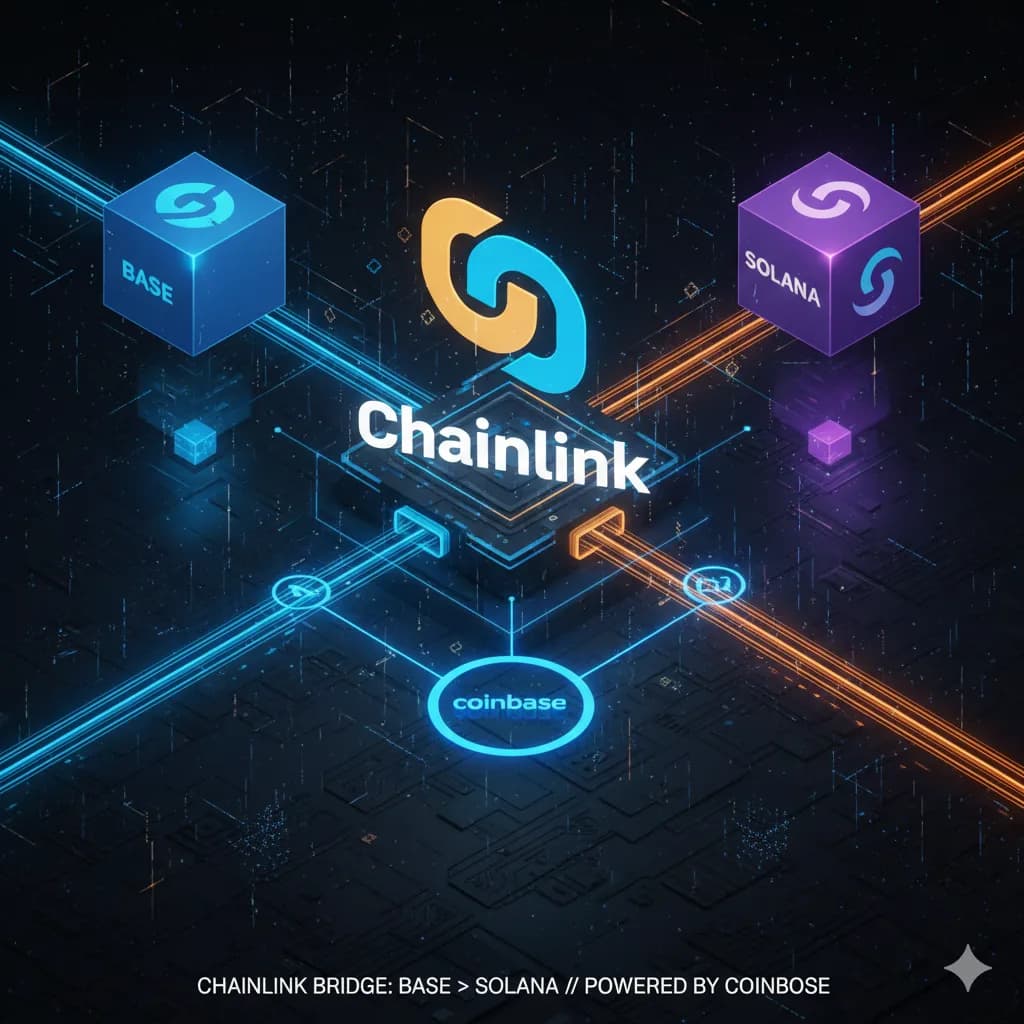
Base, launched by Coinbase in 2023, is an optimistic layer-2 on Ethereum designed for ultra-low fees and high throughput. It now boasts over 10 million monthly active users. Solana, meanwhile, offers up to 65,000 TPS and a booming DeFi/NFT ecosystem with more than $5 billion in Total Value Locked (TVL).The new bridge,built in collaboration between Coinbase, Chainlink, and the Base team delivers:
Bidirectional Asset Transfers: Users can move SOL and SPL tokens from Solana to Base, and vice versa. Tokens are locked or burned on the source chain and minted or unlocked on the destination chain. Instant Integrations: Already live on major apps such as Aerodrome (Base’s leading DEX) and Zora, allowing users to trade Solana-native assets directly within the Base ecosystem. Dual-Layer Security: Chainlink’s CCIP acts as a custom cross-chain oracle, with independent verification from both Coinbase validators and Chainlink nodes. This “bespoke” setup uses Merkle proofs and finality checks every ~300 blocks, making exploits far harder than in traditional bridges.As Jesse Pollak, creator of Base, put it: “This is another step toward Base becoming the home for all of onchain: every asset, on every chain, anytime. Solana is just the beginning.”
Impact for Users and Developers
For users, the bridge means unified liquidity: deposit SOL on Aerodrome, trade it instantly against Ethereum-based assets, and pay almost nothing in fees. It eliminates the painful fragmentation that forces people to juggle multiple wallets and chains.For developers, it’s a game-changer. They can now natively integrate Solana assets into Base dApps, creating truly cross-chain experiences. “By leveraging Chainlink CCIP as the cross-chain infrastructure for the Base-Solana Bridge, Base enables developers to build the most secure cross-chain applications,” said Johann Eid, Chief Business Officer at Chainlink Labs.The announcement lit up X (formerly Twitter), with official posts from chainlink and base declaring: “Base meets Solana. Connected by Chainlink.” The community is already calling it one of the biggest bridging lanes yet for institutional and retail adoption.
Challenges and What’s Next
Cross-chain bridges have historically been hack magnets, with over $2 billion lost to exploits. The dual-verification model from Chainlink and Coinbase significantly raises the bar, but ongoing audits and smooth UX will determine long-term success.Looking ahead, this bridge could expand to additional chains (Polygon, Avalanche, etc.) and eventually support arbitrary cross-chain messaging, unlocking complex use cases like cross-ecosystem yield farming or unified NFT marketplaces. With Base and Solana among the fastest-growing networks, Chainlink is cementing itself as the “glue” of Web3.In short, the Base-Solana Bridge isn’t just a technical connection,it’s a clear signal that interoperability is no longer optional. It’s the foundation the industry needs to go mainstream.Ready to try it? Check the official docs at docs.base.org/base-chain/quickstart/base-solana-bridge and start bridging today.
Thank you for reading. Share this article with your network!