
Benjamin Graham: The Father of Value Investing
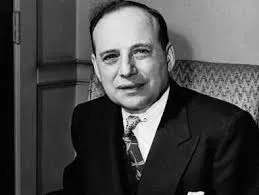
Benjamin Graham is universally recognized as the "father of value investing," a philosophy that revolutionized the world of finance and continues to influence successful investors around the world. Born on May 9, 1894, in London to a Jewish family, Graham moved with his parents to New York at the age of one. His life was marked by early challenges, including the death of his father when he was only nine, which plunged the family into poverty. Despite this, Graham demonstrated extraordinary intelligence, becoming a cornerstone of modern financial theory.
Education and Training
Graham excelled academically from a young age. He entered Columbia University at age 15 and graduated with a degree in philosophy and mathematics in 1914, at just 20 years old. He turned down a teaching position at the university and instead opted for a career on Wall Street, starting as a chalker (a person responsible for writing stock prices on a blackboard) at Newburger, Henderson & Loeb. His academic training provided him with a solid foundation in quantitative analysis and logic, elements that would define his investment approach. He later returned to Columbia as a professor at the Business School from 1928 to 1955, where he trained generations of investors.
Professional Career
Graham's career took off rapidly. In 1920, he became a partner at Newburger, Henderson & Loeb, and in 1926 he founded his first investment fund. He survived the crash of 1929, although he suffered significant losses, which prompted him to refine his strategies. In 1936, together with Jerome Newman, he created the Graham-Newman Corporation, an investment firm that operated until 1956 and generated impressive, above-market returns. Graham was a pioneer in financial statement analysis, emphasizing the importance of valuing companies based on fundamental data rather than market speculation.
His major works reflect this evolution. In 1934, he published "Security Analysis," in collaboration with David Dodd, a text considered the bible of financial analysis, which introduced concepts such as intrinsic value and the margin of safety. In 1949, he followed with "The Intelligent Investor," a more accessible book aimed at individual investors, emphasizing emotional discipline and diversification. Graham also wrote other texts, such as "The Interpretation of Financial Statements" (1937), and articles in financial journals, cementing his reputation.
Graham's Thought and His Future Influences
Graham's core thinking revolves around value investing: purchasing stocks that are undervalued relative to their intrinsic value, calculated through rigorous analysis of balance sheets, assets, and cash flows. He introduced the concept of "Mr. Market," a metaphor to describe the market as an irrational partner who offers buying opportunities when prices are low. Graham promoted a conservative approach, emphasizing the margin of safety to protect against misjudgments.
The influences of his thinking extend well beyond his time. Warren Buffett, one of his students at Columbia in the 1950s, is perhaps the most striking example. Buffett worked for Graham at the Graham-Newman Corporation from 1954 to 1956 and applied value principles to transform Berkshire Hathaway into a billion-dollar empire. Buffett has often stated that "The Intelligent Investor" changed his life, and continues to cite Graham as his primary mentor, emphasizing not only financial strategies but also values such as kindness and generosity.
In addition to Buffett, Graham influenced investors such as Irving Kahn, Walter Schloss, Charles Brandes, and Bill Ackman, who founded funds based on his principles. Today, his legacy endures in the world of finance: value funds, quantitative analysis, and even ESG investing incorporate Grahamian elements. In an era dominated by high-frequency trading and cryptocurrencies, his disciplined approach remains a bulwark against irrational speculation, influencing educators, analysts, and retail investors through books and online courses.
Graham died on September 21, 1976, in France, leaving a lasting legacy. His thinking not only generated wealth for many, but also promoted a financial ethic based on rationality and patience, principles that will continue to guide future generations.
Thank you for reading. Share this article with your network!